Introduction
When it comes to livestock, feed is everything. The quality of hay you choose directly impacts animal health, growth, reproduction, and profitability. But here’s the challenge: not all hay is the same. Two bales may look alike at first glance, yet their nutritional value can be drastically different.
For farmers and livestock owners, knowing how to choose the right hay is a critical skill. Feeding poor-quality hay might save a few dollars upfront, but it can lead to weaker animals, lower milk yield, reduced weight gain, and even costly health issues. On the other hand, investing in premium hay ensures stronger, healthier herds and better returns.
At EN FARMS, we’ve spent nearly two decades producing premium hay—Alfalfa, Bermuda, Oats, and Teff Grass—for farmers across the region and beyond. This blog is your practical guide to selecting quality hay, with tips on what to look for, mistakes to avoid, and why EN FARMS hay is trusted by livestock owners worldwide.
Why Choosing the Right Hay Matters
Nutrition Is the Foundation
Livestock diets depend heavily on hay, especially in non-grazing seasons. Good hay provides essential protein, fiber, and energy. Poor hay, however, lacks the nutrients animals need to thrive.
Health and Longevity
Feeding moldy, dusty, or low-quality hay can lead to digestive issues, respiratory illnesses, and even reproductive problems. Choosing the right hay protects herd health.
Profitability on the Farm
High-quality forage leads to better milk yields, faster weight gain, and reduced veterinary bills—all of which contribute to long-term profitability.
Factors That Define Hay Quality
Color
The color of hay is the first indicator of quality.
- Bright Green: Indicates high nutrient content, proper curing, and freshness.
- Yellow or Brown: Often caused by sun bleaching, over-maturity, or poor storage. Such hay has lower vitamin content.
- Dark or Black: A red flag—this usually means mold or water damage.
Leaf-to-Stem Ratio
Leaves contain most of the nutrients, especially protein. A bale with a high leaf content is premium-quality, while stem-heavy hay is often coarse, less digestible, and less nutritious.
Smell
Premium hay smells fresh and slightly sweet.
- Good Sign: Grassy, sweet aroma.
- Bad Sign: Musty, sour, or moldy odors—an indication of improper storage or moisture damage.
Texture
Good hay feels soft and pliable, making it easier for animals to chew and digest. Coarse, brittle hay may be rejected by livestock or cause dental wear.
Moisture Content
Moisture plays a critical role in hay storage.
- Ideal Range: 12–15%.
- Too High (>18%): Risk of mold and heating, which reduces quality and can even cause fires in storage.
- Too Low (<10%): Leaves shatter easily, leading to nutrient loss.
Nutritional Content Beyond the Eye Test
Visual inspection is important, but it’s not enough. Serious buyers often request nutritional testing to confirm hay quality.
Protein Content
Protein is vital for growth, milk production, and reproduction.
- Alfalfa: 18–20% protein.
- Bermuda: 10–12% protein.
- Teff: 12–14% protein.
- Oat Hay: 9–12% protein.
Fiber Levels
Fiber ensures proper digestion in ruminants. High-quality hay provides enough fiber for digestion without being overly stemmy.
Energy (Total Digestible Nutrients, or TDN)
Higher TDN values mean animals get more usable energy from the hay. This is especially important for lactating cows and growing calves.
Mineral Balance
Premium hay provides essential minerals such as calcium, phosphorus, and magnesium. These contribute to stronger bones, better milk composition, and reproductive health.
Matching Hay Type to Animal Needs
Different livestock require different hay varieties. Here’s a breakdown:
- Dairy Cows: Alfalfa for maximum protein and milk yield.
- Beef Cattle: Bermuda or Oat Hay for steady growth and finishing.
- Horses: Teff Grass for sensitive horses; Bermuda for maintenance diets.
- Goats and Sheep: Mixed hays like Alfalfa-Oat blends for balanced nutrition.
Choosing the wrong hay type can lead to overfeeding (too rich) or underfeeding (too poor in nutrients).
Common Mistakes Buyers Make
- Choosing Based on Price Alone
Cheap hay often lacks nutrients, leading to higher costs in animal health and lost productivity. - Ignoring Storage Conditions
Even the best hay loses value if stored improperly. Buyers should check whether bales were kept in dry, ventilated conditions. - Not Matching Hay to Herd Needs
Feeding high-protein Alfalfa to mature beef cattle may cause weight gain issues, while feeding low-nutrient grass hay to dairy cows lowers milk production. - Skipping Quality Checks
Assuming all hay is the same is a costly mistake. Visual inspection and lab analysis should always be part of the buying process.
Why EN FARMS Hay is a Trusted Choice
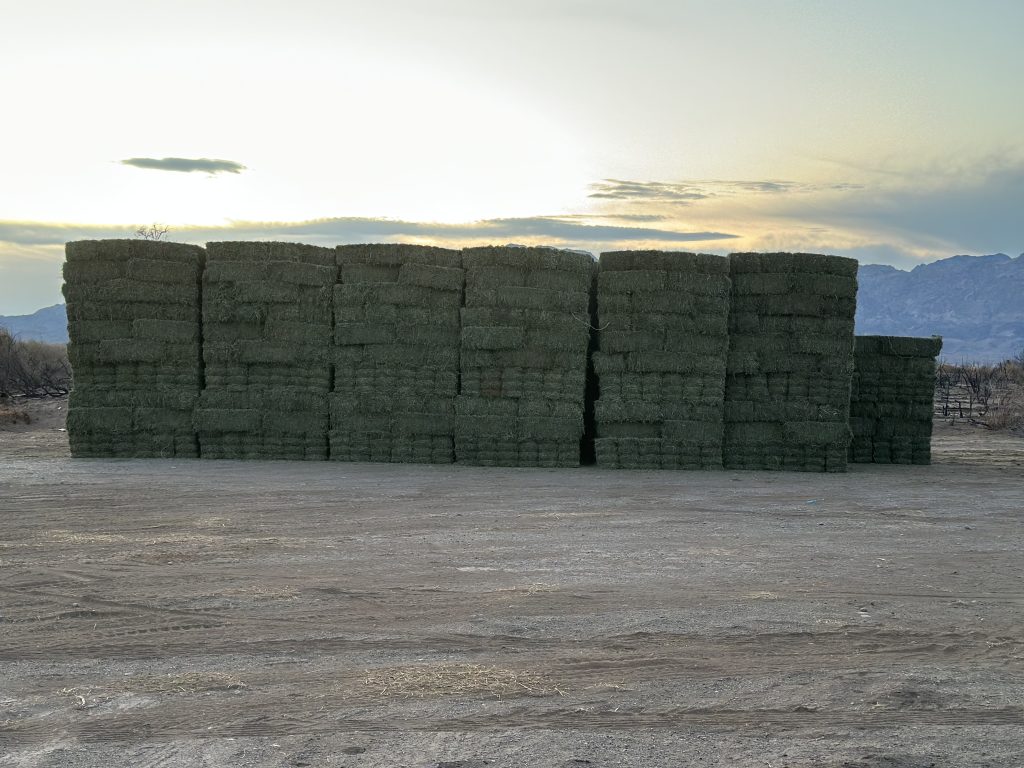
At EN FARMS, we know that every bale matters. That’s why our hay production process is built around quality from the ground up.
Harvested at the Right Stage
We cut hay at peak maturity—when nutrient levels are highest and fiber is most digestible.
Strict Moisture Control
Our hay is cured and baled under controlled conditions to maintain optimal moisture and prevent mold.
Multiple Varieties Available
From protein-rich Alfalfa to soft Teff Grass, we offer different hay options for different livestock requirements.
Proper Storage
Our bales are stored in ventilated, covered facilities to protect against weather damage and nutrient loss.
Consistency Across the Year
No matter the season, EN FARMS customers know they’re getting consistent, high-quality hay every time.
Tips for Buyers When Purchasing Hay
- Inspect Before Buying: Look for color, smell, and leaf content.
- Ask for Lab Results: Confirm protein and fiber levels.
- Buy in Bulk When Possible: Securing your hay supply reduces seasonal price fluctuations.
- Consider Delivery & Storage: Ensure hay can be delivered safely and stored properly on your farm.
Conclusion
Choosing the right hay isn’t just about buying feed—it’s about investing in your animals’ health and your farm’s success. High-quality hay means stronger, healthier, and more productive livestock. Poor-quality hay, on the other hand, leads to wasted money, wasted time, and weakened herds.
At EN FARMS, we’ve built our reputation on supplying premium hay that farmers can trust—hay that’s green, nutrient-rich, properly stored, and tailored to livestock needs. From Alfalfa to Teff Grass, every bale reflects our commitment to quality.
For farmers who want the best for their herds, the choice is clear: premium hay isn’t optional, it’s essential. And EN FARMS delivers it.